This project is funded by the Umweltstiftung Michael Otto.
Since 2023, we have been supporting the Schöneberg Forest in the Lower Oder Valley National Park. As part of preliminary work with the support of the IVU-Stiftung, we began researching and developing the concept for the Schöneberg Wild Forest.
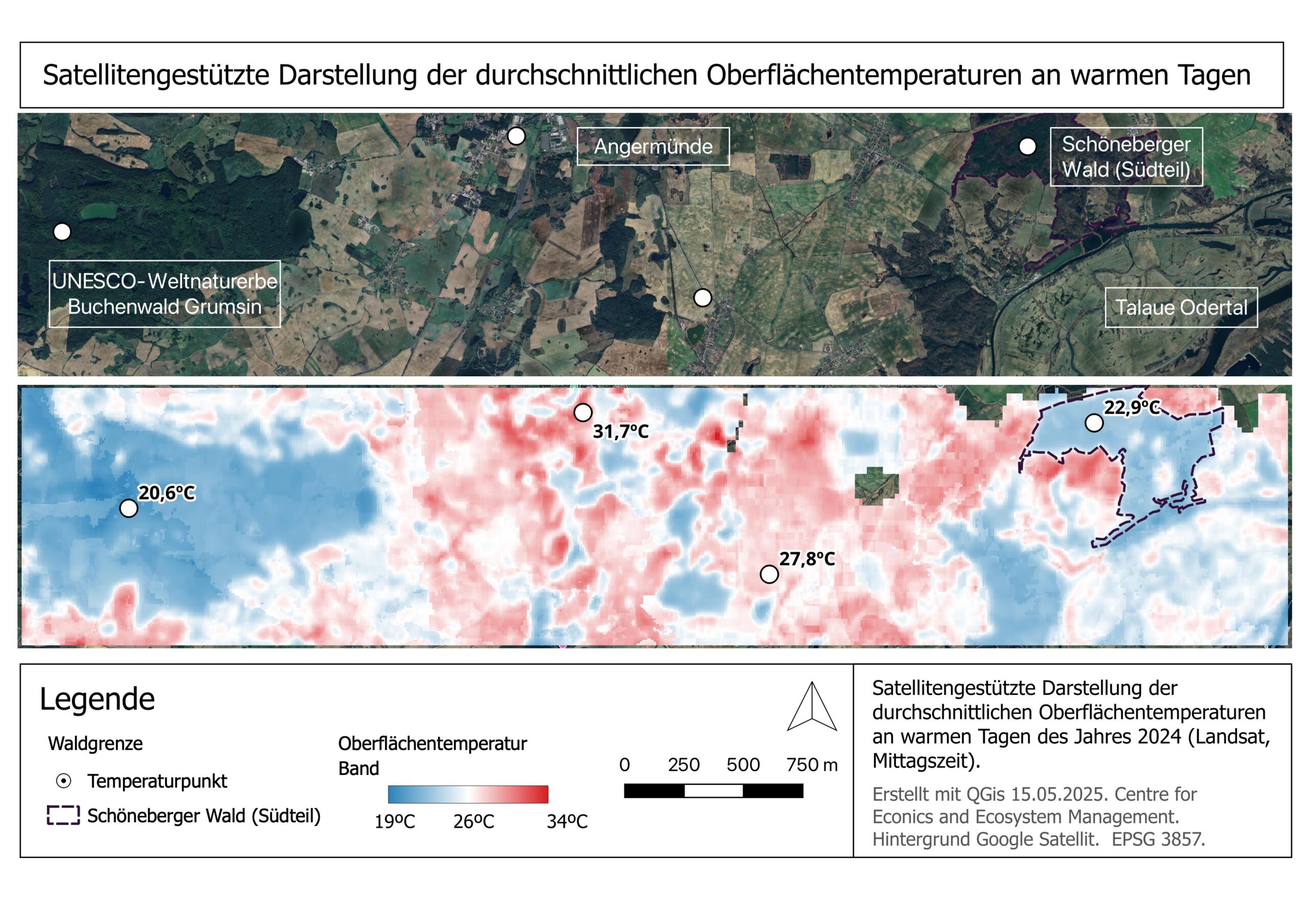
The approximately 400-hectare area in northeastern Brandenburg (Uckermark district) has been under strict protection since 1995. Like many forests in northeastern Brandenburg, the Schöneberg Forest suffers greatly from heat and drought stress, exacerbated by extreme edge effects from the surrounding open landscape. The forests planted in the 1980s are particularly affected, with some showing high mortality rates since 2018. The area thus offers a model for future forest development in Brandenburg and Germany. Due to its protected status, it offers a rare opportunity to observe the self-regulation of forest areas over the long term and to gain insights for sustainable forest management in times of climate crisis.
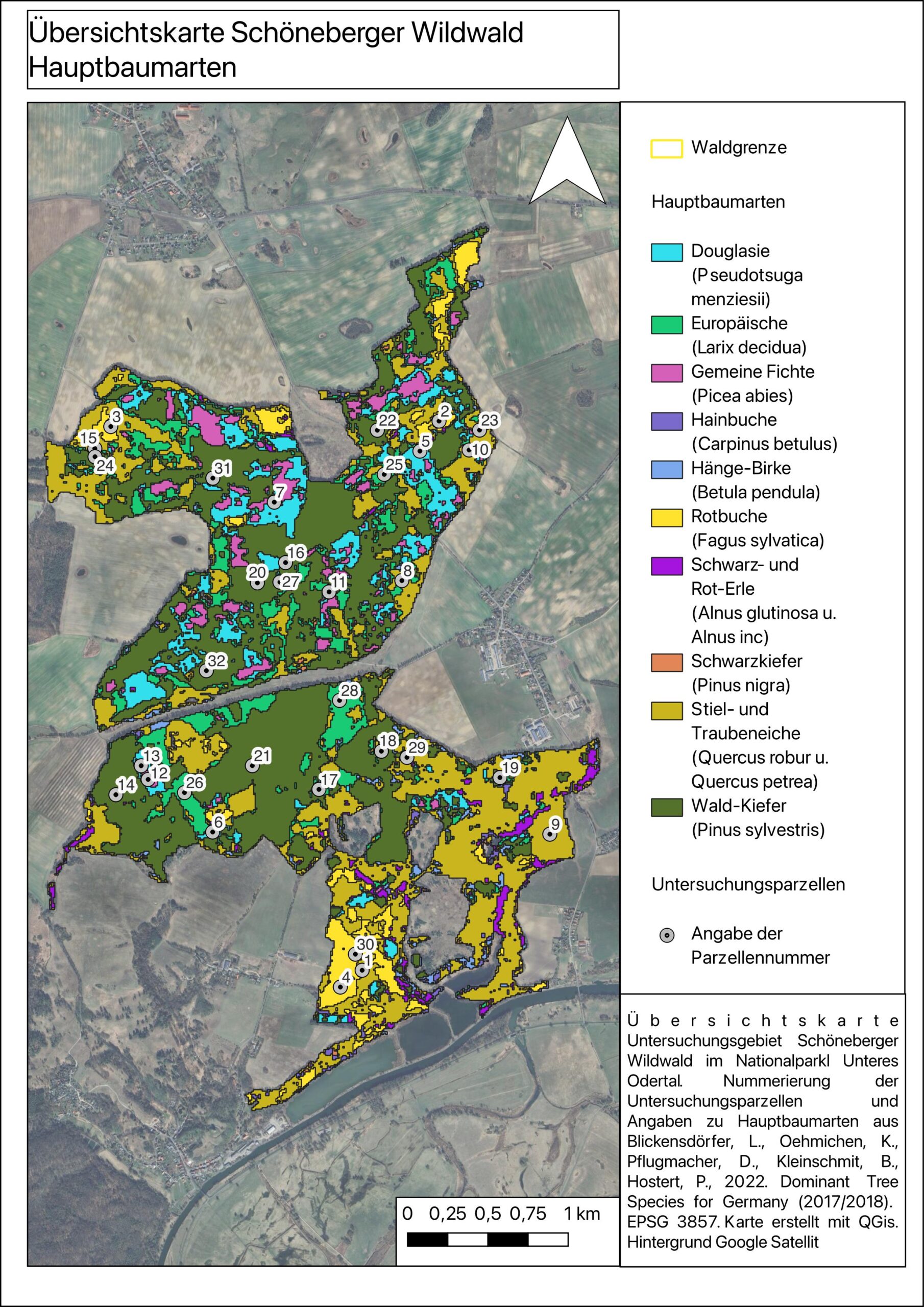
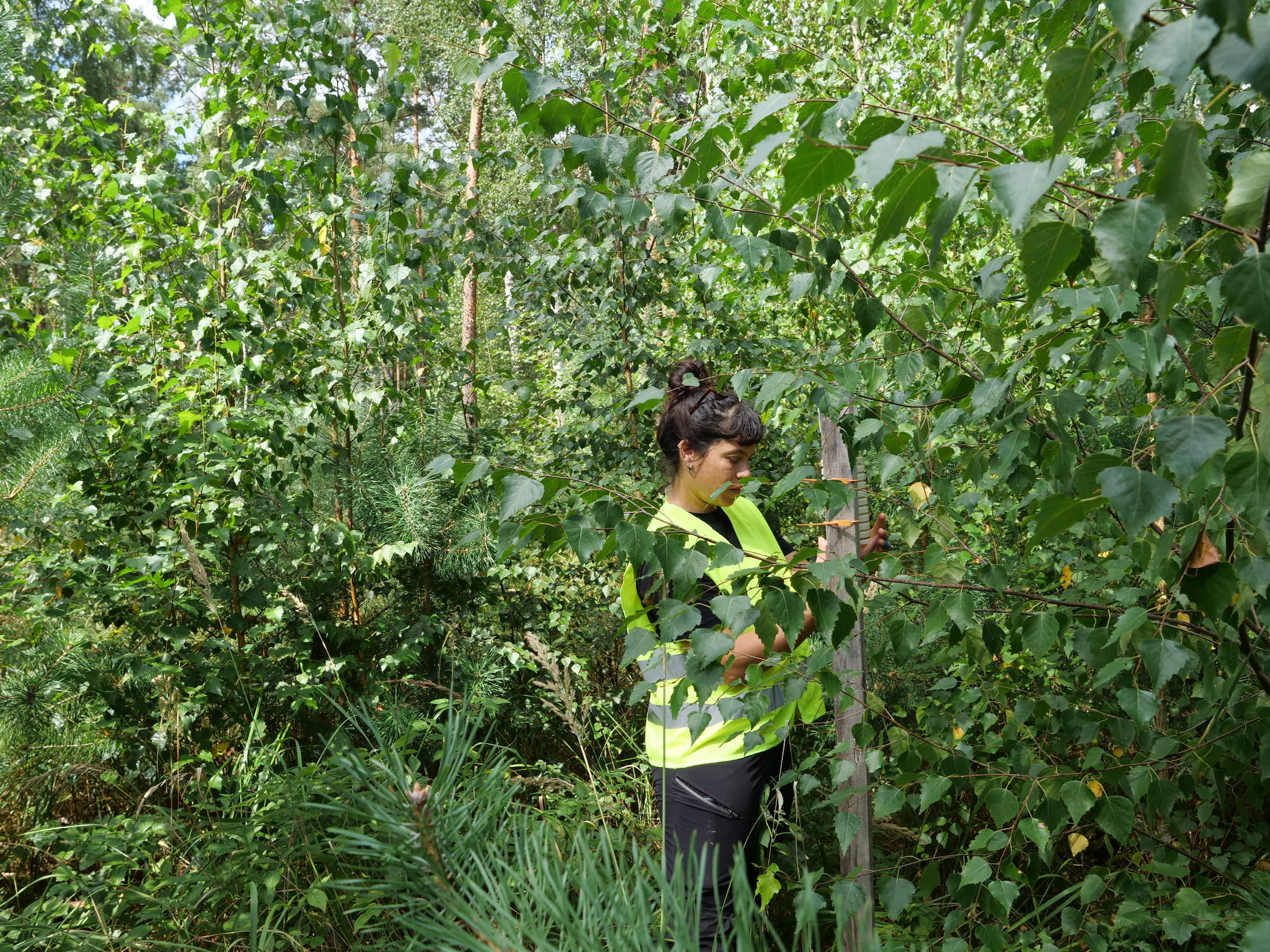
The aim of the project, which has been funded by the Umweltstiftung Michael Otto since 2025, is to comprehensively document the “pronaturation” of this forest area. We use remote sensing methods, microclimatic and vegetation surveys, and soil analyses to record the dynamic changes. In the future, the project will also be used for educational purposes, allowing the Schöneber Forest to serve as a real-world laboratory and “green classroom.”The project is also supported by the NABU Forest Institute in Bühl-Vimbuch.
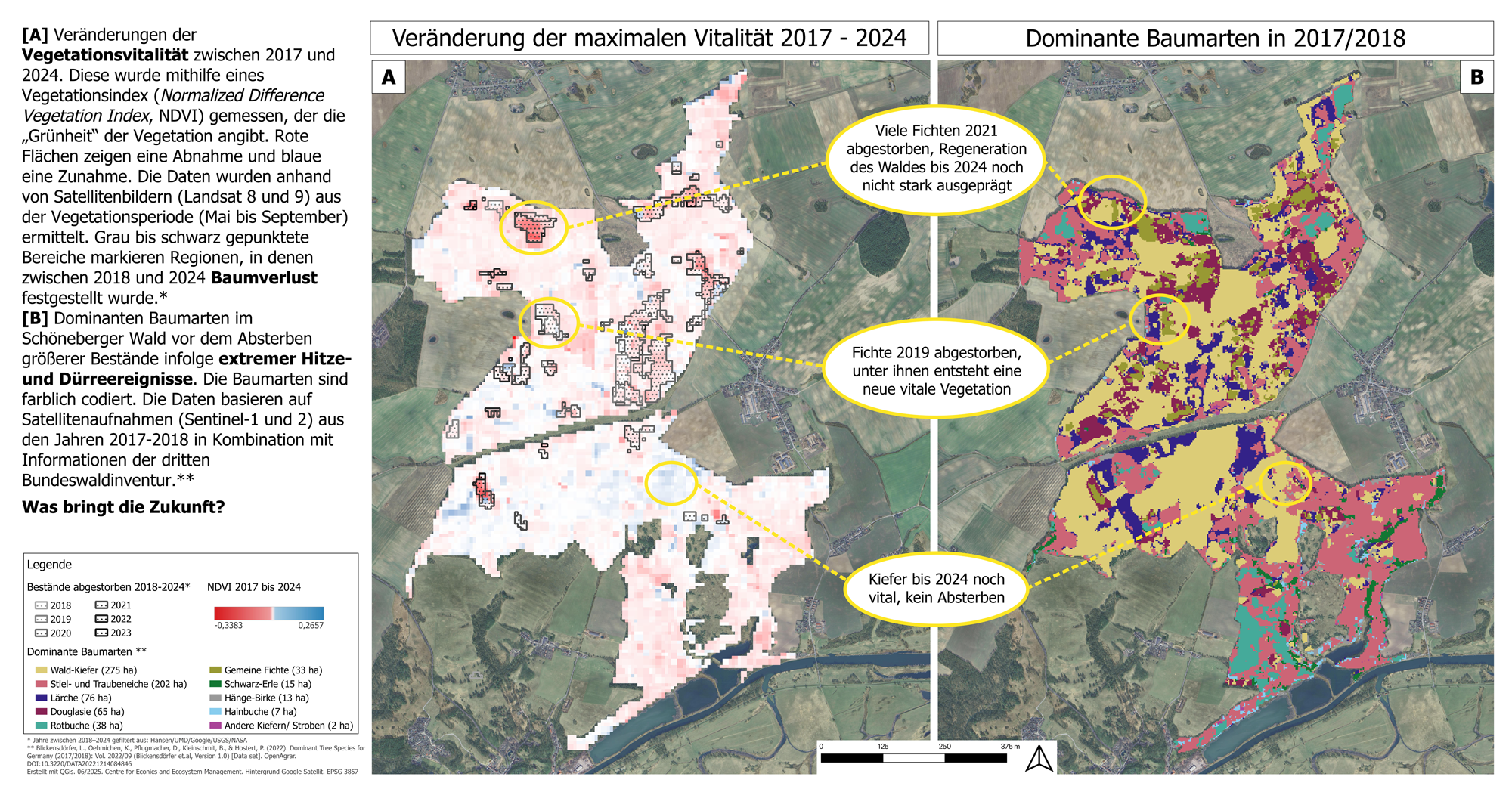
[B] Dominant tree species in the Schöneberg Wild Forest before the death of large stands as a result of extreme heat and drought events. The tree species are color-coded. The data is based on satellite images (Sentinel-1 and 2) from 2017-2018 in combination with information from the third National Forest Inventory.