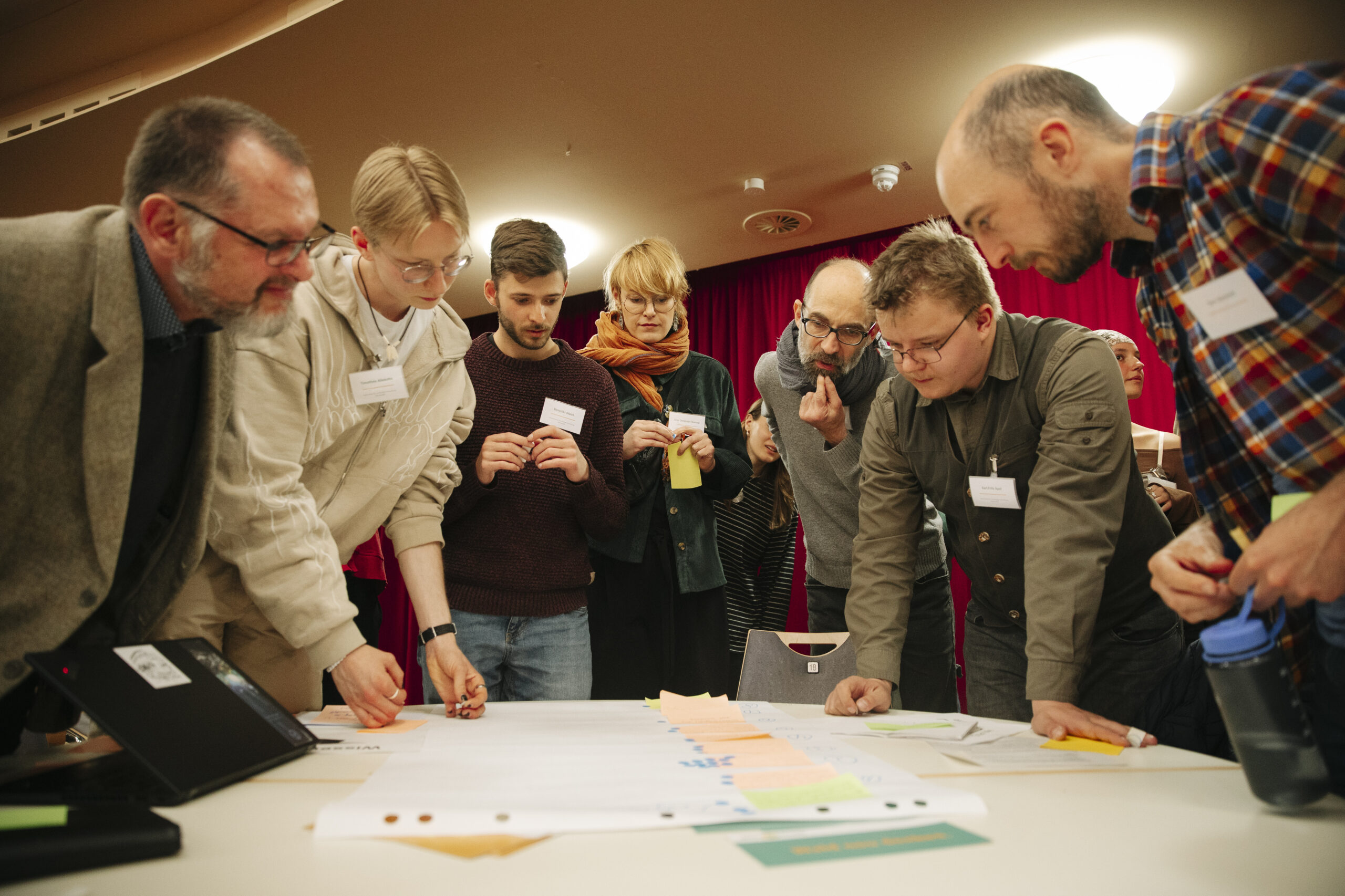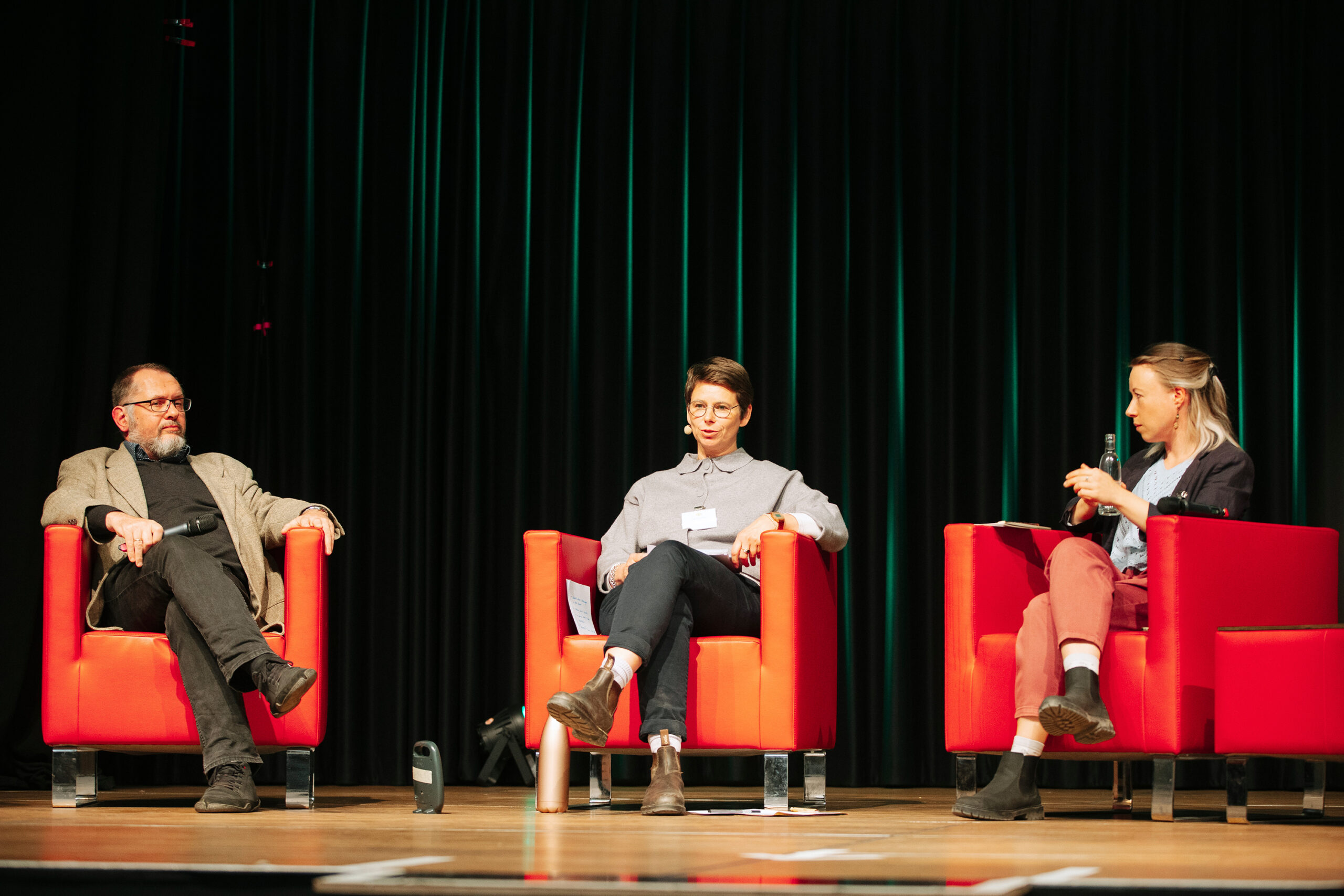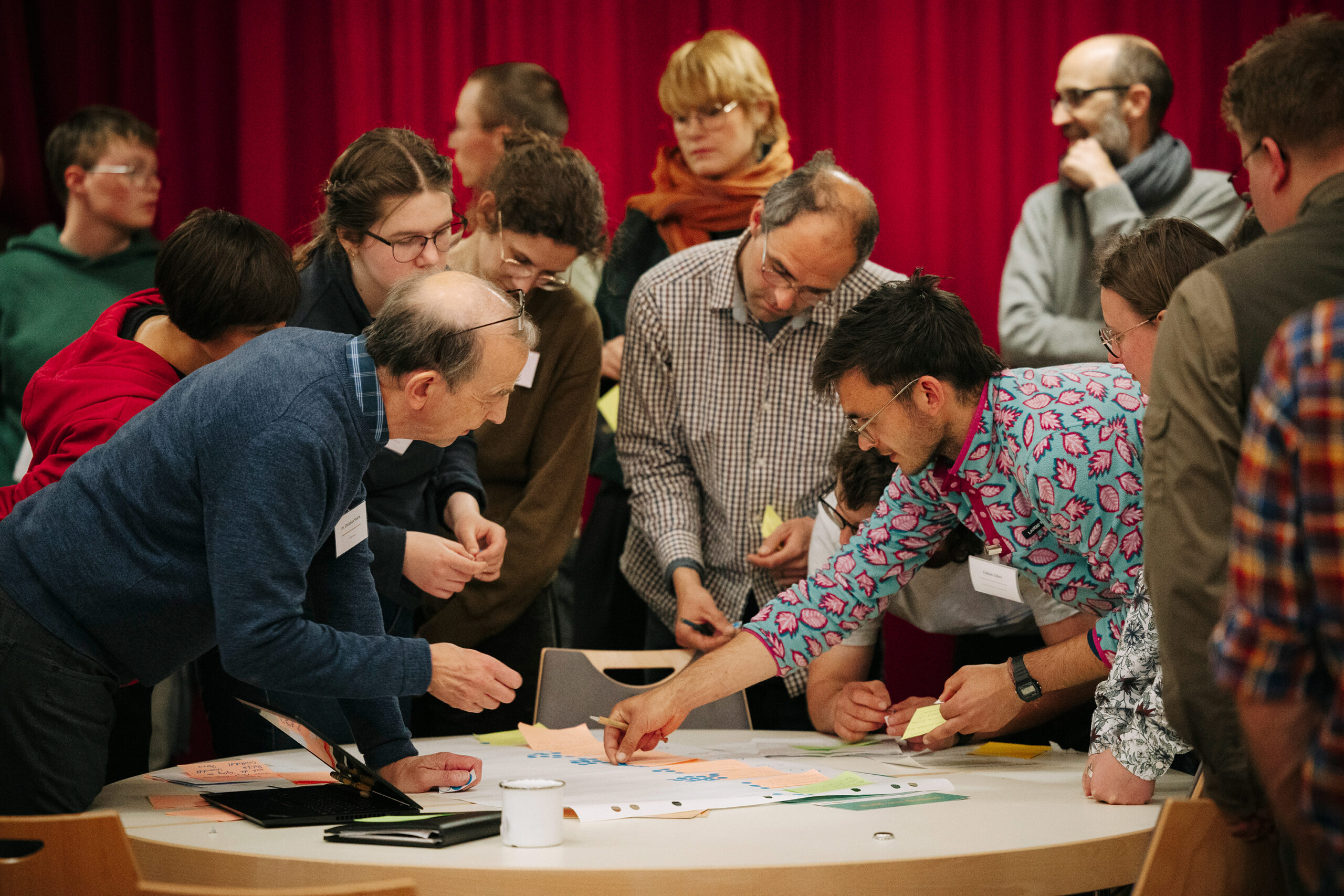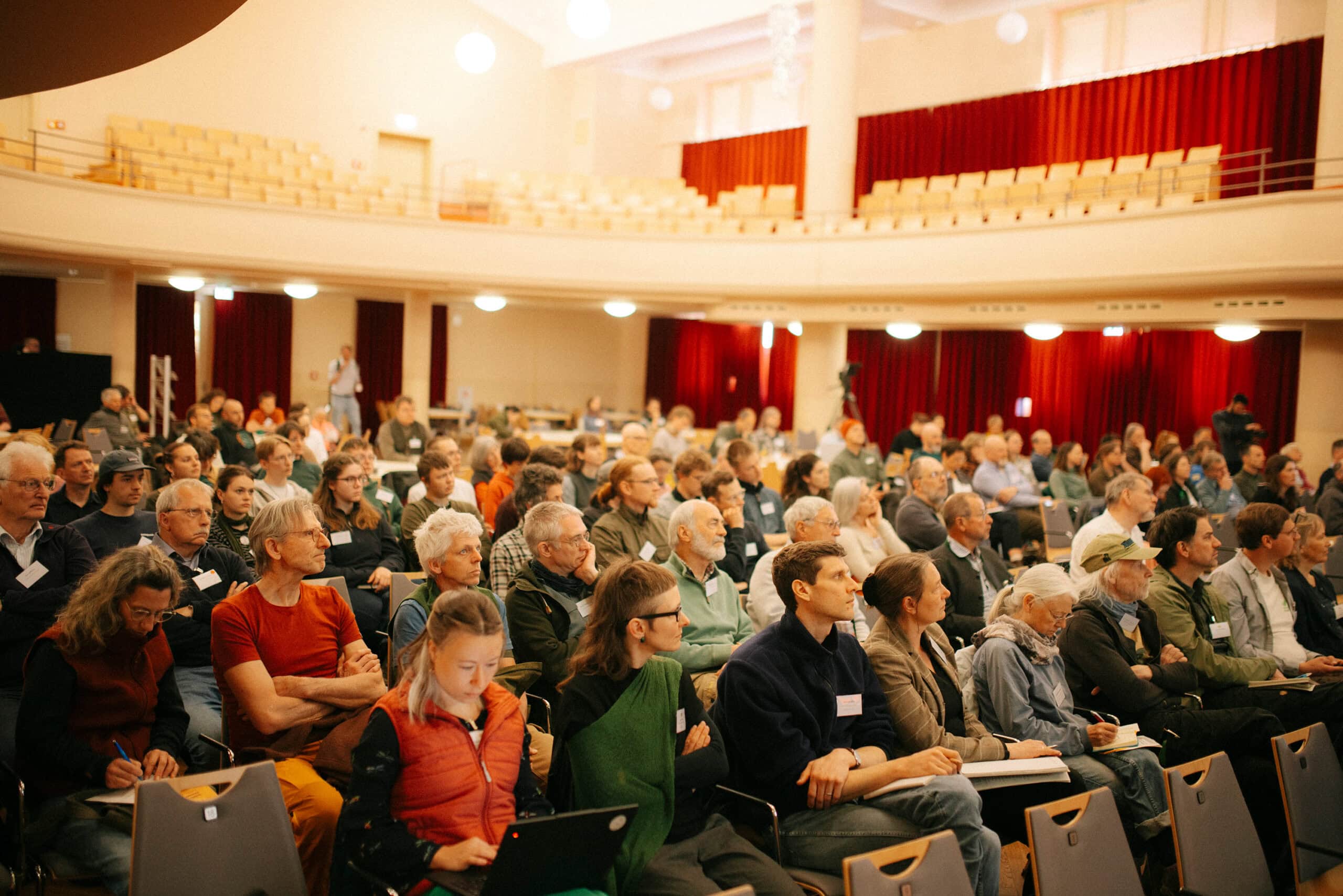
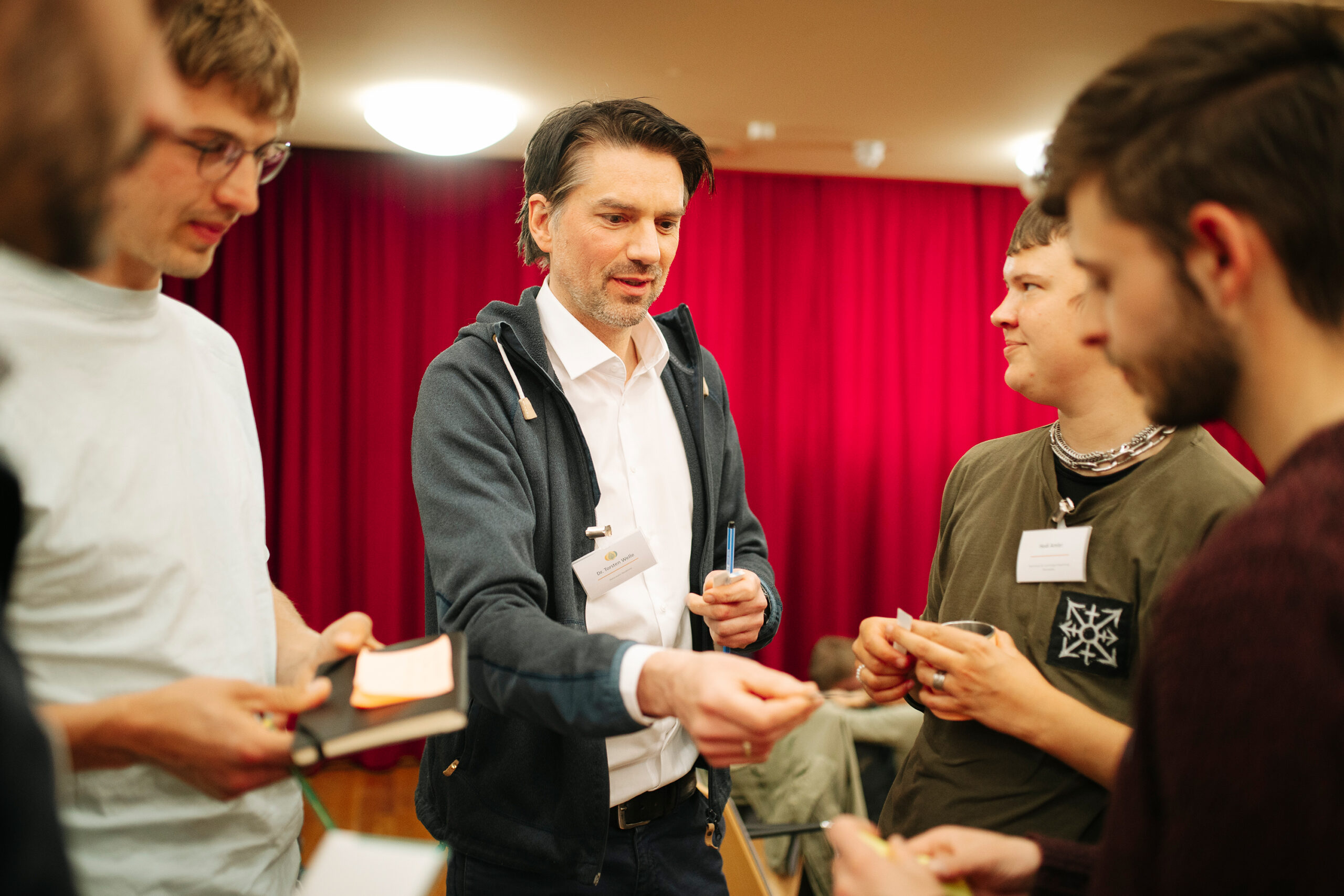
Forests are nested systems – the larger system influences the parts reciprocally, just as the components act back on the greater structure. This is how the two days of the first Forest-Alliance (Wald-Allianz) conference in Meiningen, held from April 27 to 28, 2026, felt, bringing together over 150 experts from forestry practice, science, politics, and civil society – including students from the Socialecological Forest Management programme. Not to present ready-made answers, but to exchange experiences and learn from one another.
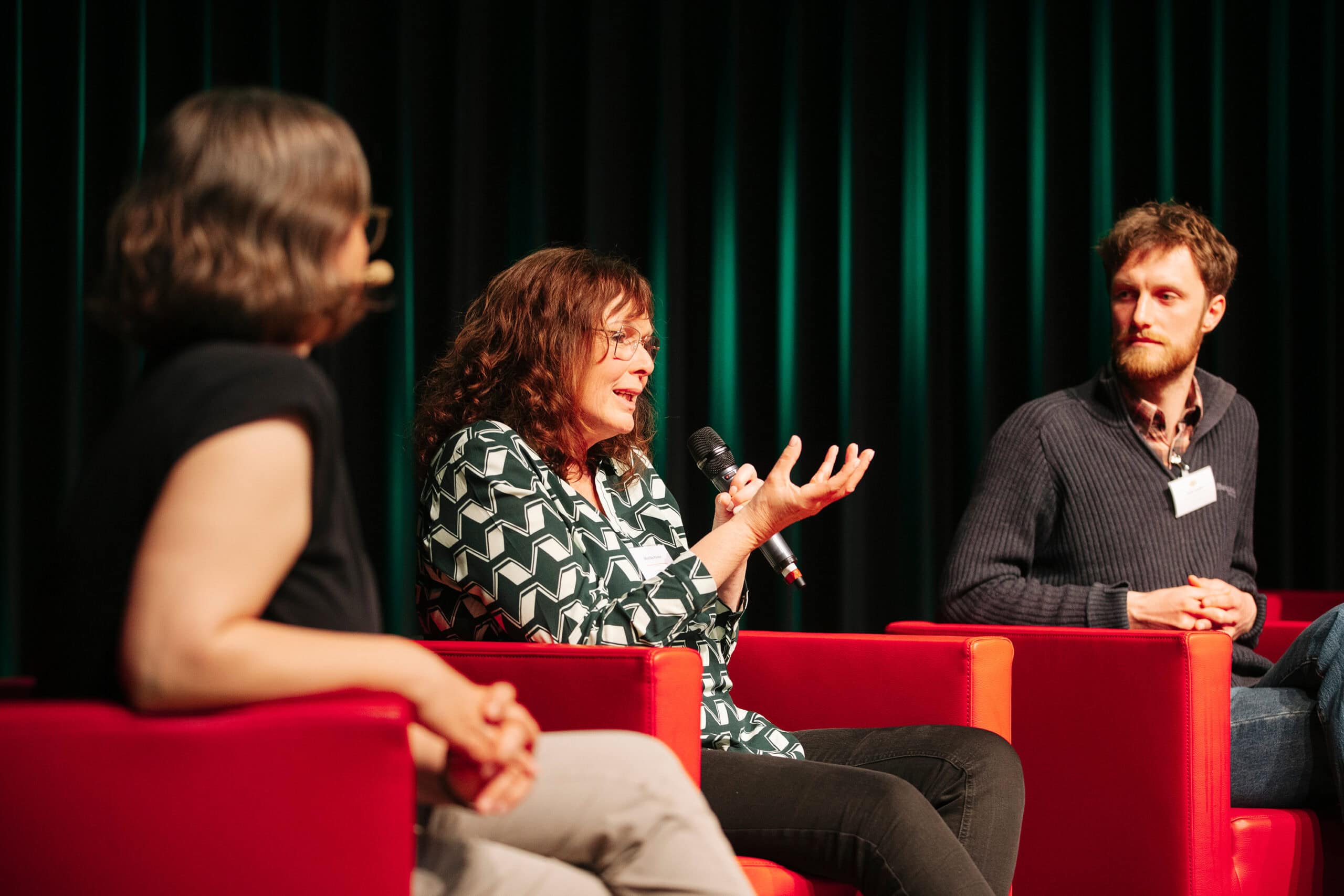
In an inspiring lecture, physicist Anders Levermann from the Potsdam Institute for Climate Impact Research discussed “Folding the World“, namely the idea that expansion beyond planetary boundaries is no option, while diversity and complexity can grow within these boundaries leading to innovation. The conference provided numerous examples of what such diversity in forests might look like: whether through the highly diverse genome of the beech tree, whose full potential is not yet realized in current practice, as Prof. Erwin Hussendörfer from the Weihenstephan-Triesdorf University of Applied Sciences clearly demonstrated; the instructive dynamics of forest development after natural disturbances in the Bavarian Forest National Park, or paths out of the monotony of pine monocultures as shown by Dietrich Mehl, Head of the Forestry Office in Reiersdorf in Brandenburg. Topics ranged from thermodynamics and the concept of pronaturation to very practical nature-based measures that significantly improve water retention in forests, developed by Monika Runkel, head of the Hachenburg Forestry Office in the Westerwald and Forester of the Year 2025.
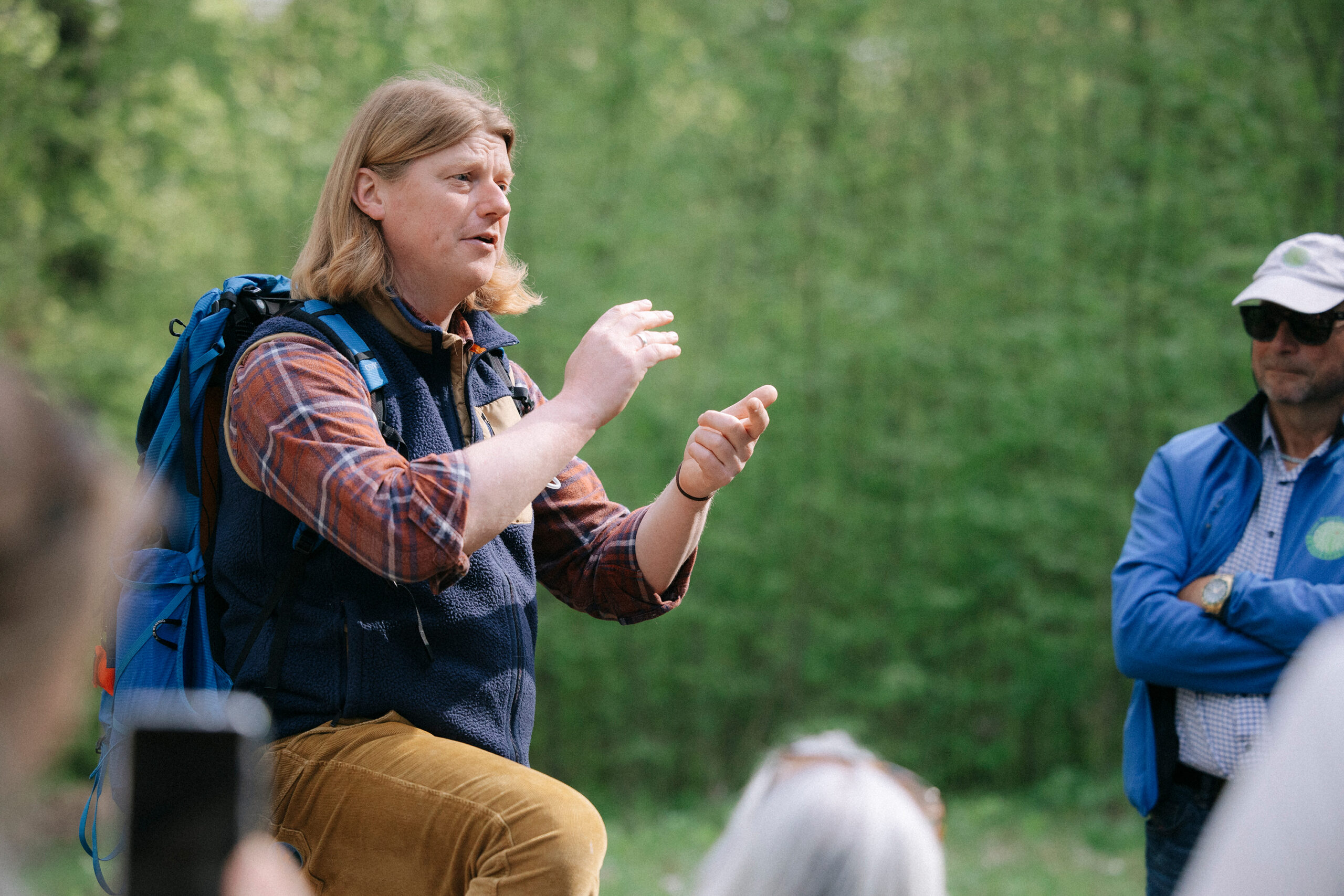
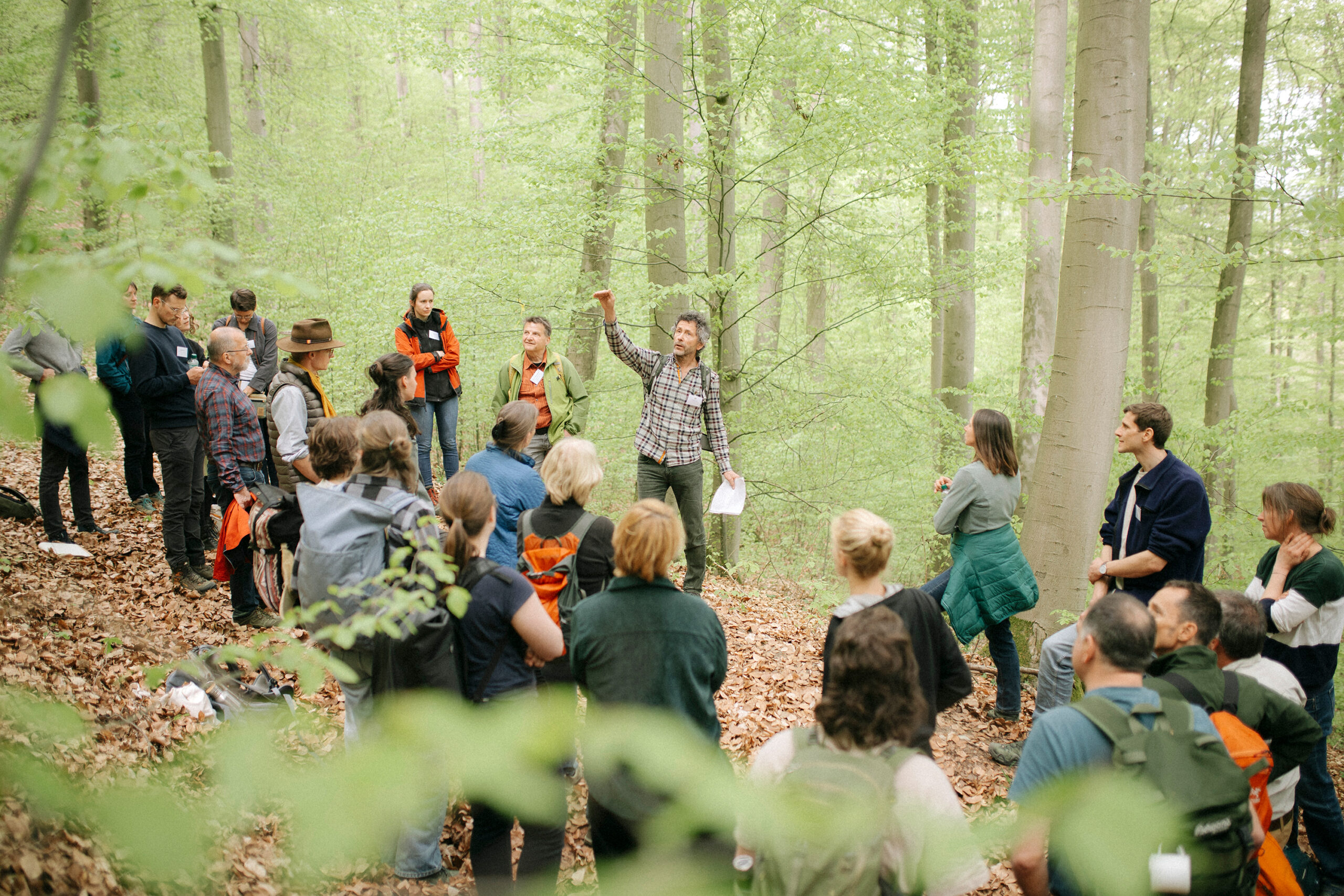
It became even more concrete during the four excursions. Participants went out to the Meiningen Municipal Forest with forester and host Sebastian Dummer, to neighboring Untermaßfeld, and to the Future Forest of the Bergwaldprojekt and the Greenpeace Umweltstiftung in Unterschönau. For the partner forests are the heart of the Forest-Alliance – conversations in the forest made much tangible that often remains abstract otherwise, sparking lively discussions. What lessons can be drawn from the experiences of the practice partners for forest management? In spruce stands on heavily acidified soils with high game populations, just as in older beech forests?

The great potential of social-ecological forest management was palpable – at the same time, it became clear how urgently we need healthy forests in the climate crisis. Yet this alliance gives hope! Thanks to the entire organizing team and all fellow campaigners and partners in the Forest-Alliance who, just like the mycorrhiza in the forest, enable the growth of this network.