
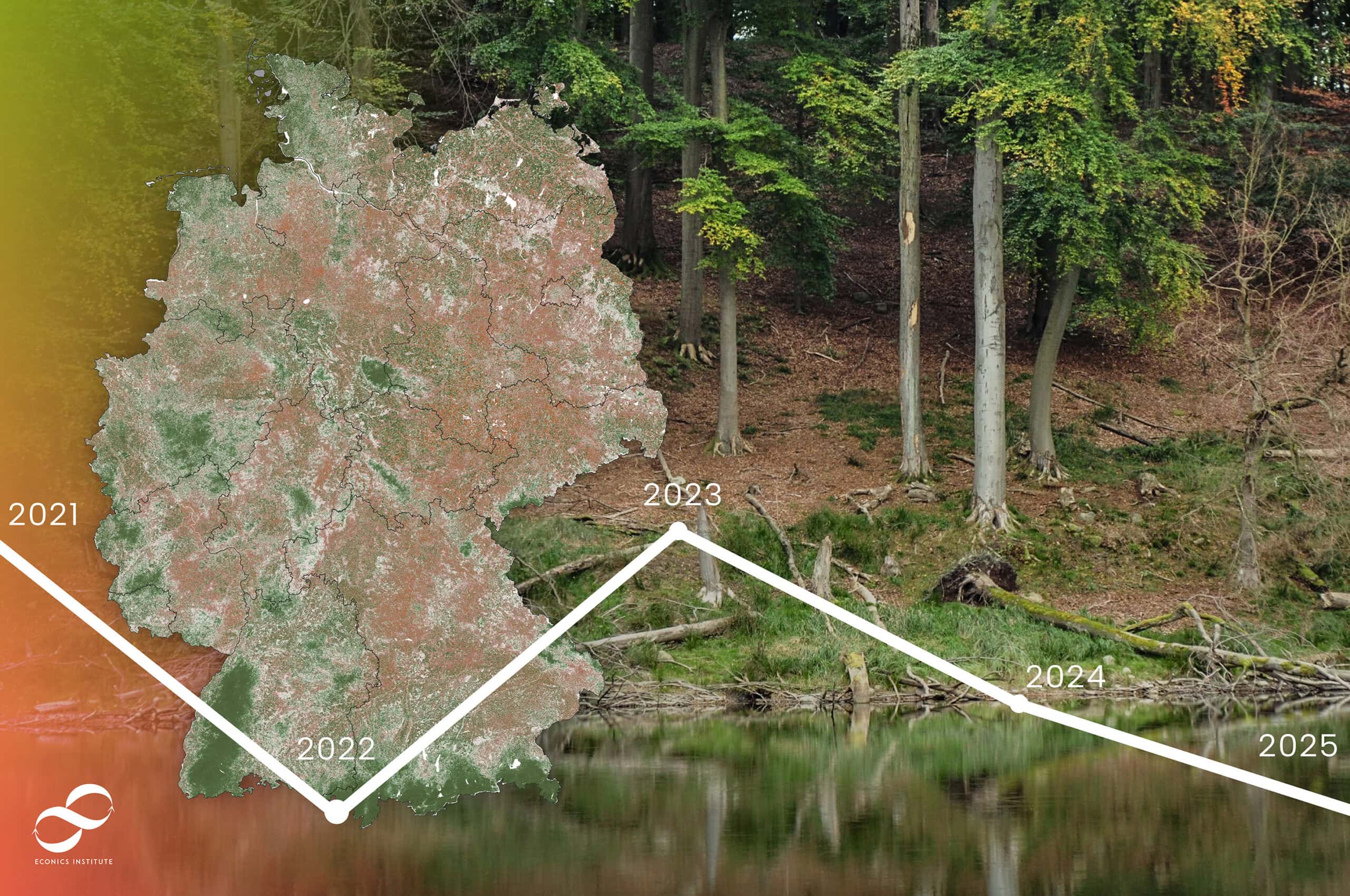
The ECONICS Green-Moist-Cool Index is a composite index for ecosystems, similar to economic indicators. Unlike the well-known Ifo Business Climate Index for the economy, however, it is not based on surveys but on real measured data, drawn primarily from high-resolution satellite imagery. First introduced in 2025, the Index highlights the central triangular relationship between green vegetation, moisture, and relative coolness. It makes visible, for every location in Germany, where ecosystems are particularly high-performing and where priorities should be set for conservation or restoration. After all, the greener, moister, and better connected a landscape is, the more effectively it can buffer stress and fulfill its natural protective function.
What is alarming, however, is that the nationwide trend is negative: in 2025, the index average is 16% lower than in 2021. The decline from 2024 to 2025 amounted to 7.2%. Intensively used agricultural landscapes, degraded floodplains, and sealed surfaces are developing into large-scale problem regions, while large, unfragmented, green, and moist regions are (still) functioning as climate refuges. Valuable ecosystems should therefore be protected, and impaired landscapes strengthened through renaturation, adapted land use, and desealing.
“The deteriorating condition in large parts of the country is not an abstract conservation issue — it has concrete consequences for human health, our supply security, and safety,” emphasizes study lead Prof. Dr. Pierre Ibisch of the ECONICS INSTITUTE.
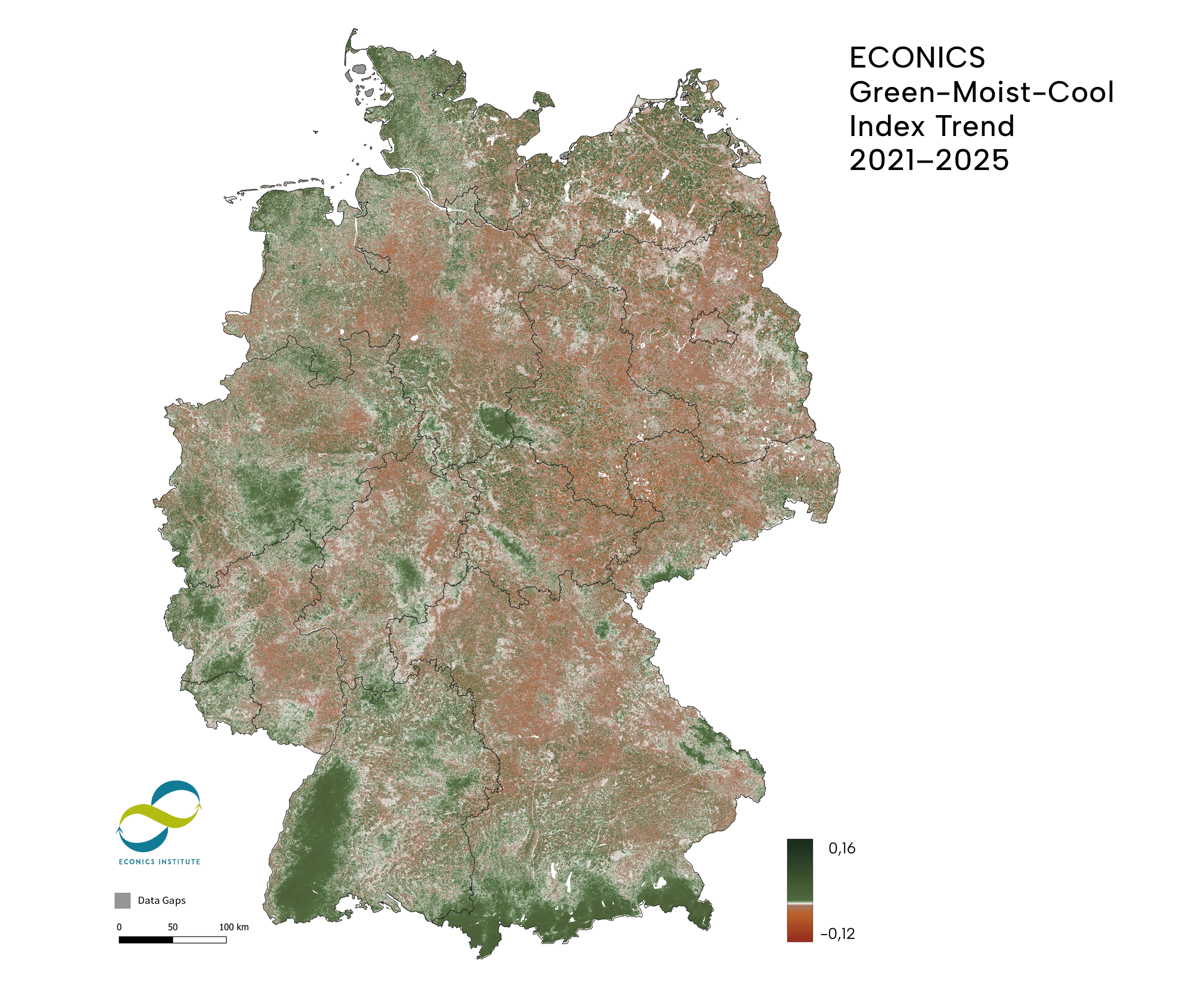
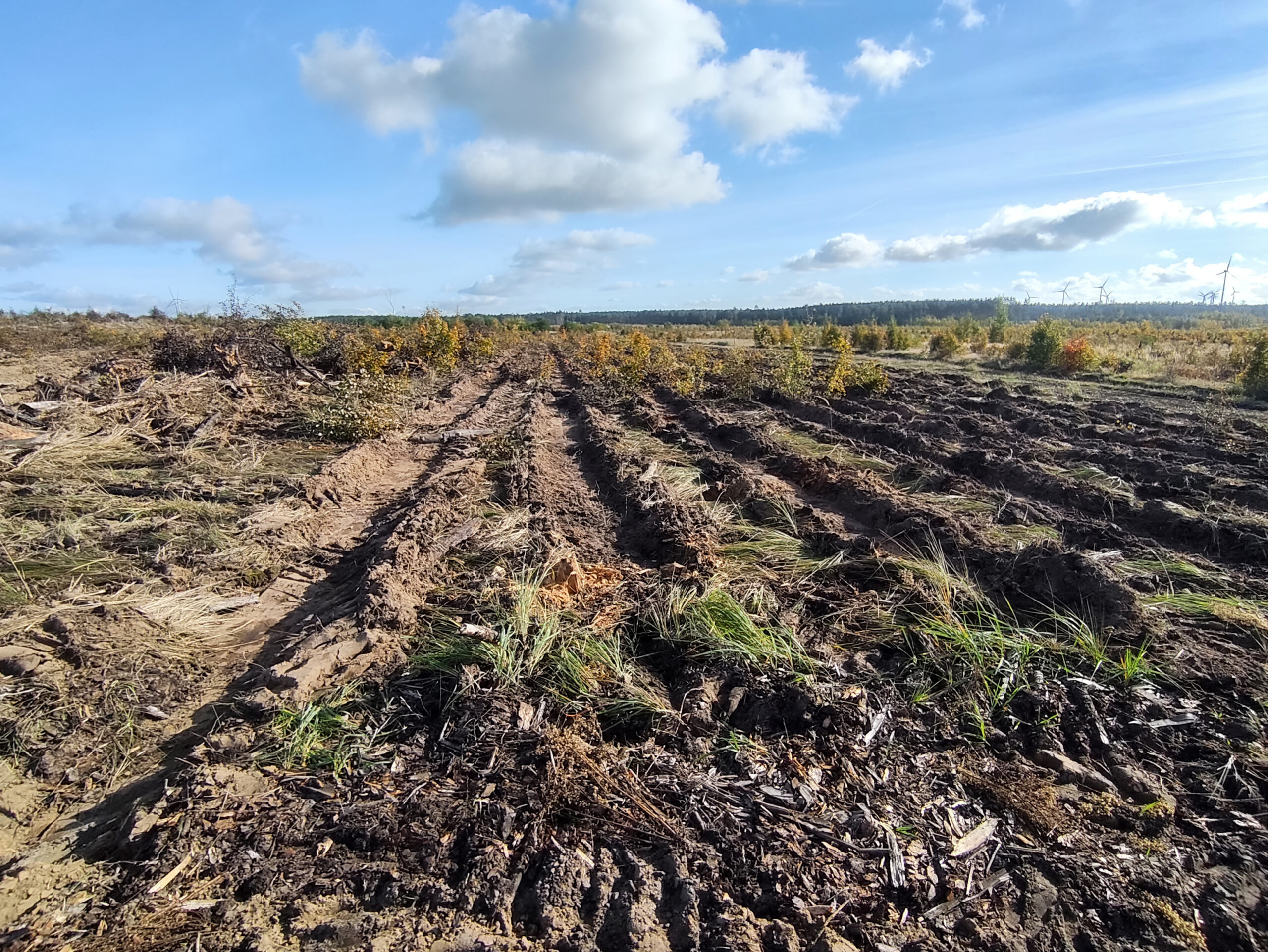
The situation tends to worsen in areas where conditions are already critical. A marked decline in index values can be observed in particular in urban heat islands, on dry agricultural land, and in areas with increased tree dieback and clear-cutting. Negative trends also dominate in the pine forests of northeastern Germany. That developments within land-use classes unfold dynamically and unevenly is especially evident in forested areas. The largest contiguous region with a positive trend lies in the Black Forest. In Bavaria, by contrast, the north is marked by ongoing spruce dieback in Franconia and a correspondingly declining index trend, while the southern Alpine foothills and the Alpine region show a positive trend. Recovery from previous deterioration can also be observed in forest regions—one example is the Harz: following the severe spruce calamities of 2018, large-scale forest regeneration is now underway there, reflected in a positive trend.
The new findings on the working capacity of ecosystems in Germany are also available internationally as a preprint. Based on the integration of the three central datasets of the ECONICS Green-Moist-Cool Index 2021–2025 (mean index value), the five-year trend, and the “Ecological Coreness” of green-moist-cool areas, a map of the Natural Infrastructure for Germany has been created for the first time. As a result, five priority categories are proposed for the nationwide zoning of Natural Infrastructure and the prioritization of necessary measures.
The location chosen to present the new findings together with the NABU (The Nature And Biodiversity Conservation Union)– the “Eiskeller” in the Spandauer Forst, Berlin – was not chosen at random: this landscape in northwest Berlin illustrates the importance of near-natural green and wetland areas for climate adaptation in major cities like Berlin. It exemplifies what nature can achieve: “Where green spaces, moisture, and natural processes are preserved, valuable climate buffers emerge. Even in cities, we need nature not as a nice-to-have, but as infrastructure that protects us from heat and extreme weather,” explains NABU President Jörg-Andreas Krüger.
Against this background, it is of overriding strategic priority to regularly record and interpret changes in the performance of landscapes in Germany, in order to inform political decisions at the national and local level.
This gives rise to concrete recommendations:
a. Targeted, cost-effective data analysis, monitoring, and knowledge transfer
To steer measures effectively and adaptively, the systematic use of cost-effective satellite-based data is essential — the resulting insights must be incorporated into national reporting, management plans, and concrete climate protection projects.
b. A large-scale, holistic planning approach at the landscape level and landscape-ecologically defined protected assets
Functional landscape units must be understood, protected, and preserved systemically as a whole, with regulating ecosystem functions explicitly recognized as protected assets.
c. Strengthening Germany’s protected area system
The protected area network must be reassessed, as it does not meet technical and legal requirements — many protected areas need to be enlarged, consolidated, and better connected.
d. Structuring, diversifying, and revitalizing large, cleared agricultural landscapes
Agricultural land must once again become smaller-scale and more structurally diverse, including through mandatory agroforestry systems, hedgerows, and permanent green strips.
e. Redesigning urban spaces
Municipalities must move from isolated greening measures to a systemic, functional approach and anchor connected green-blue infrastructure in land-use plans.
f. Strictly protecting and safeguarding intact climate refuges
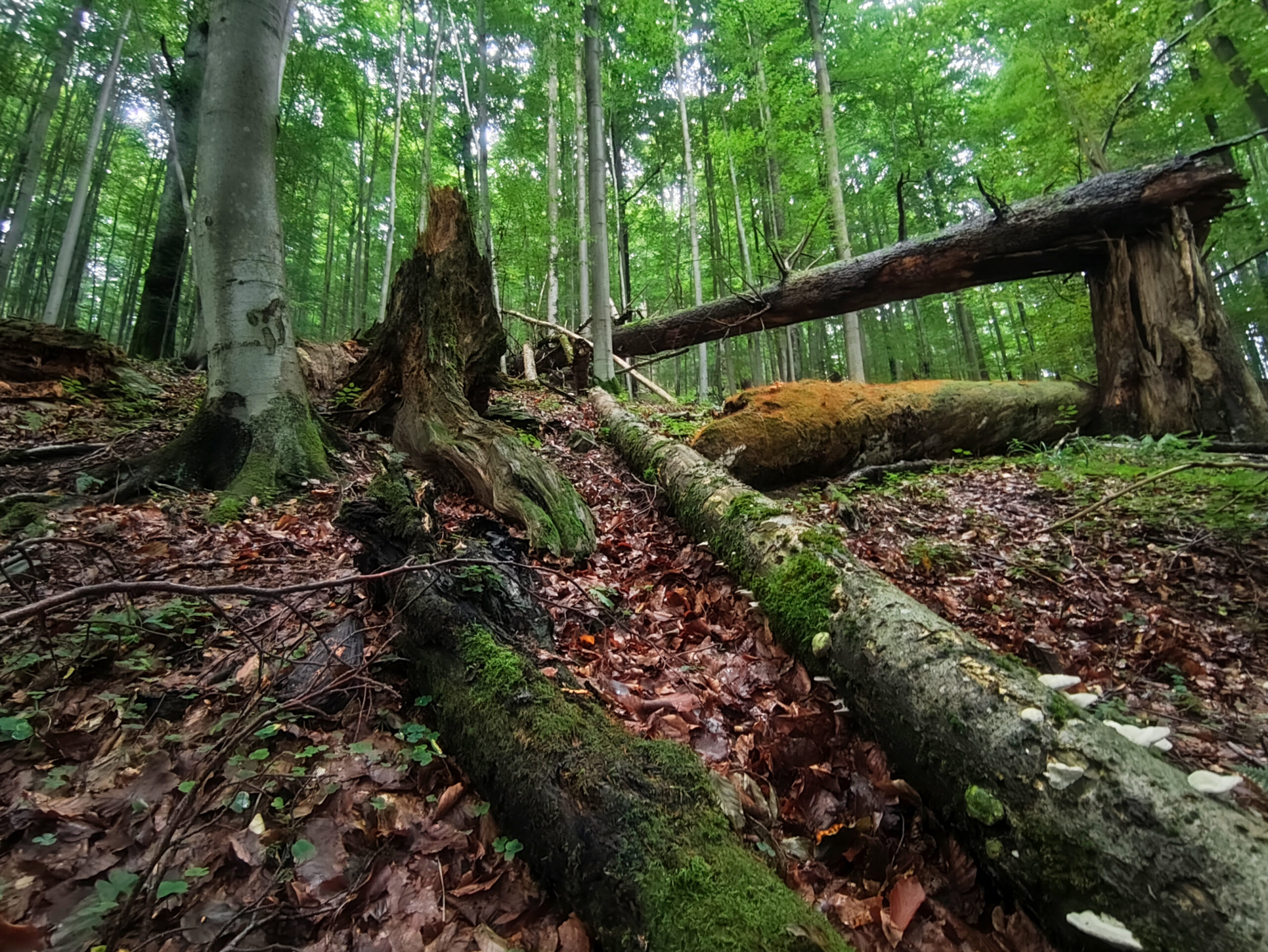
Landscapes that are still relatively cool and moist — forests in particular, as the most important climate refuges — must be strictly protected. Timber harvesting must not compromise microclimatic functionality.
g. Minimizing and reversing fragmentation, strengthening connectivity
The progressive fragmentation of functional landscapes through new ‘grey infrastructure’ must be avoided, and the strategic connection of ecosystems with higher working capacity should be pursued as part of restoration efforts.