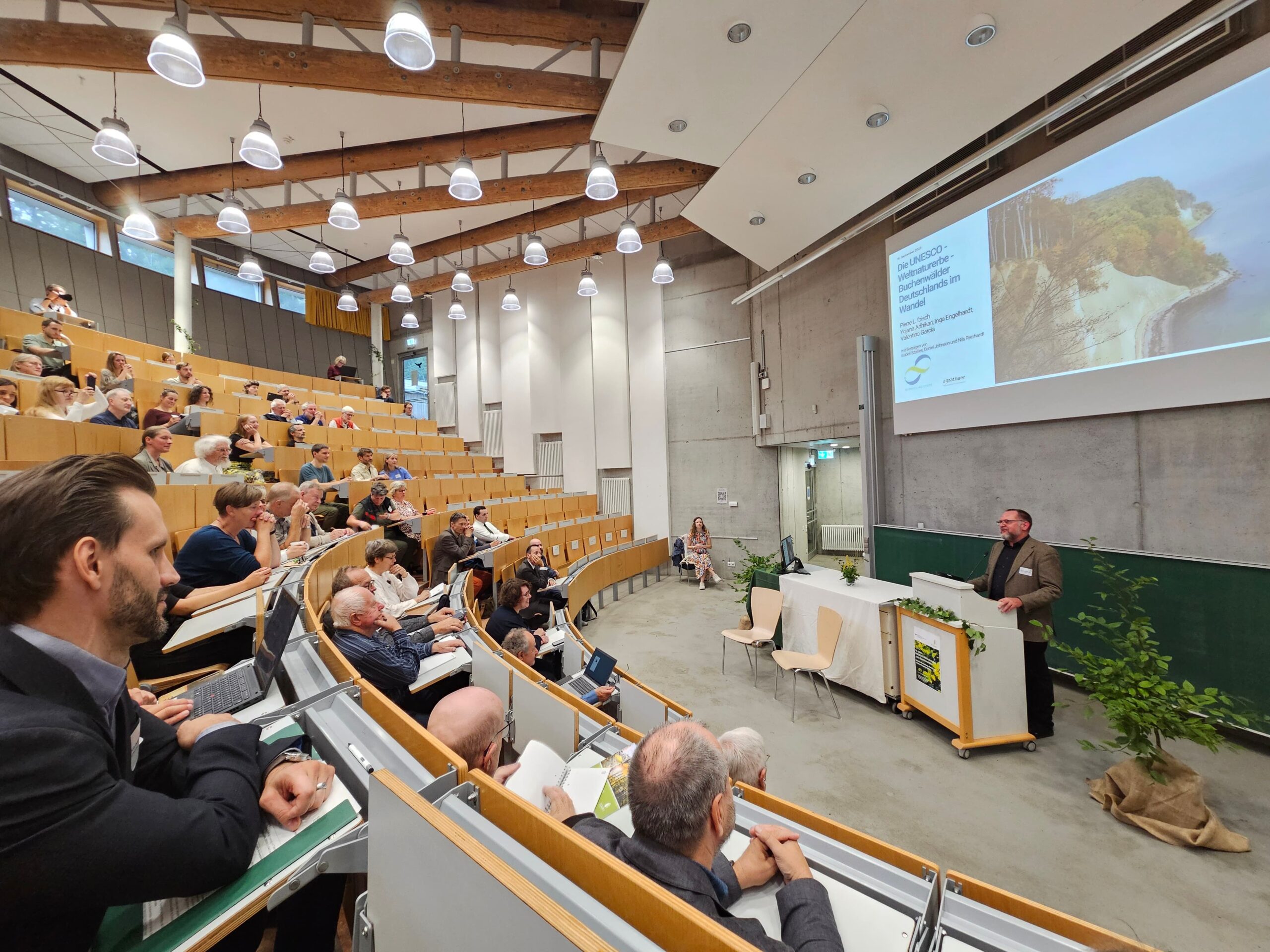
Old beech forests are archives of biological diversity. At the same time, they offer an opportunity to observe how forests develop under climate change without human intervention. Fifteen years ago, five German beech forest sites—Jasmund on the island of Rügen, Serrahn in Mecklenburg-Western Pomerania, Grumsin in Brandenburg, Hainich in Thuringia, and Kellerwald in Hesse—were inscribed on the UNESCO World Heritage List as part of the site “Ancient and Primeval Beech Forests of the Carpathians and Other Regions of Europe.” To mark the anniversary, the Federal Ministry for the Environment, Climate Action, Nature Conservation and Nuclear Safety (BMUKN) invited experts to a conference at the Eberswalde University for Sustainable Development (HNEE) on 16 September 2026. The conference focused on protecting and scientifically monitoring these forests. They preserve biological diversity while also providing an opportunity to study natural forest development under the conditions of climate change.
Prof. Dr Katharina Messerer welcomed the guests on behalf of HNEE. Environment State Secretary Jochen Flasbarth then addressed the participants by video. He described beech forests as water reservoirs and “natural air-conditioning systems” that were more resilient than many neighbouring forests. They demonstrated “that climate adaptation, nature conservation and climate protection can all succeed in forests at the same time.”
Growing Biomass, Increasing Stress
Two keynotes opened the scientific programme. Prof. Dr Pierre Ibisch (HNEE/ECONICS Institute) presented current research on how Germany’s UNESCO beech forests are changing. Barbara Engels of the Federal Agency for Nature Conservation took stock of the European World Heritage site and asked how it will develop.
The centrepiece was a comparative study commissioned by the ministry. It analyses monitoring data from all five areas and asks how resilient the forests are to climate change and how much carbon they store. Over 25 years, biomass and carbon stocks rose everywhere. On hot days, these areas are also among the coolest places in Germany. Extreme weather has left clear marks, though. The forests have so far been able to recover, but they have shown marked losses in vitality. The ministry therefore sees a continuing need for protective measures.
The plenary discussion centred on making long-term observations comparable. Prof. Dr Andreas Bolte of the Thünen Institute stressed the value of protected areas as reference sites. Only they allow natural forest development to be compared with different forms of management. Prof. Ibisch called for uniform survey methods, better coordination and more funding for monitoring. Barbara Engels recommended concentrating on a few meaningful core indicators. These should show whether the World Heritage site’s special value is being maintained, and what threatens it. Ibisch also proposed protecting older beech forests on a larger scale and examining whether the UNESCO areas and their buffer zones could be extended.
Experiences from Europe
The afternoon panel looked beyond Germany. Vasyl Pokynchereda reported from the Carpathian Biosphere Reserve in Ukraine. Jana Baumgartner represented the Permanent Secretariat of the European World Heritage site “Ancient and Primeval Beech Forests of the Carpathians and Other Regions of Europe”. They were joined by Dr Peter Meyer (Northwest German Forest Research Institute), Peter Südbeck (Foundation for National Cultural Landscapes) and Andreas Bolte (Thünen Institute). Together they discussed cross-border cooperation, experiences from the Wadden Sea World Heritage site and new findings on the future of beech under climate change.
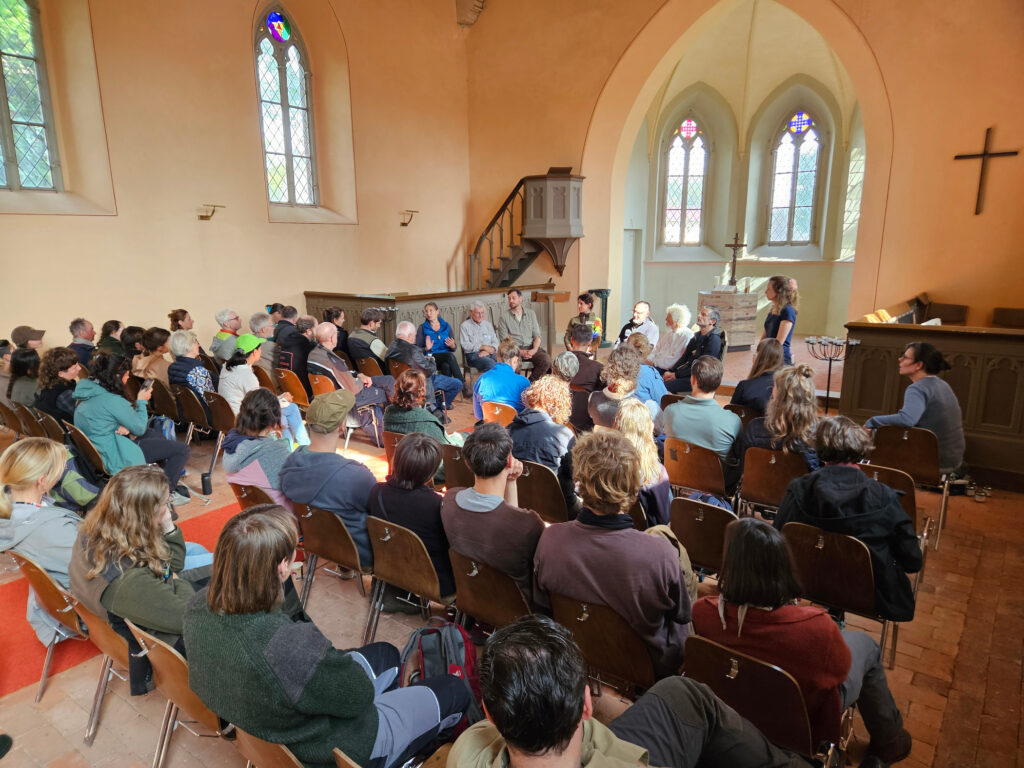
Two questions then came to the fore: how ancient beech forests regenerate naturally, and how protected areas and their surroundings can coexist. Grumsin served as an example. There, underestimated visitor numbers and inadequate infrastructure initially caused problems. The general view was that acceptance depends on open communication and on involving local people.
A Shared Heritage
Oliver Conz, who heads the Directorate for Nature Conservation, Sustainable Use of Nature and Natural Climate Action at the BMUKN, gave the closing remarks. When the sites were inscribed 15 years ago, species protection was the main concern. Today, he said, the international network matters just as much, because it brings people together and enables exchange. As a common heritage of humanity, the beech forests create a sense of connection, even in times of war and conflict. Conz also underlined the importance of scientific monitoring. Long-term observation makes it possible to follow the forests’ development and learn from it for the future.
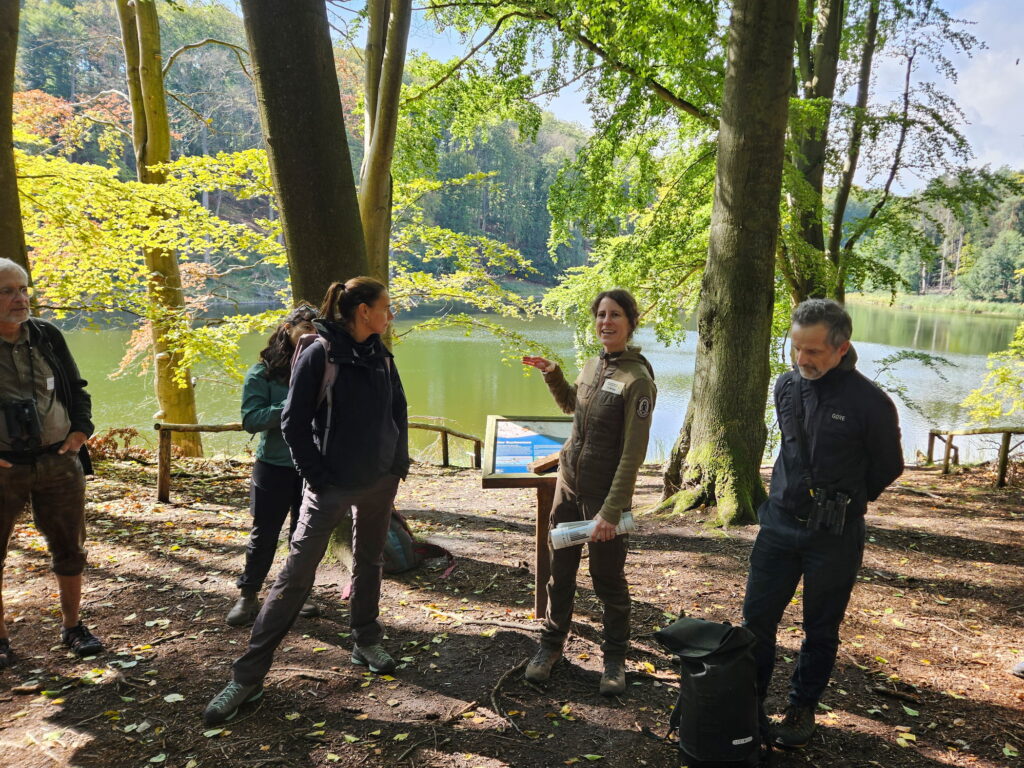
The next day, an excursion led to Grumsin in the Schorfheide-Chorin Biosphere Reserve. Participants discussed research and monitoring approaches there, along with the practical challenges of protecting the forest on site.